
Supporting Trees Worth Saving
Tree Cabling in Madison Heights for mature trees with weak branch unions and split trunks
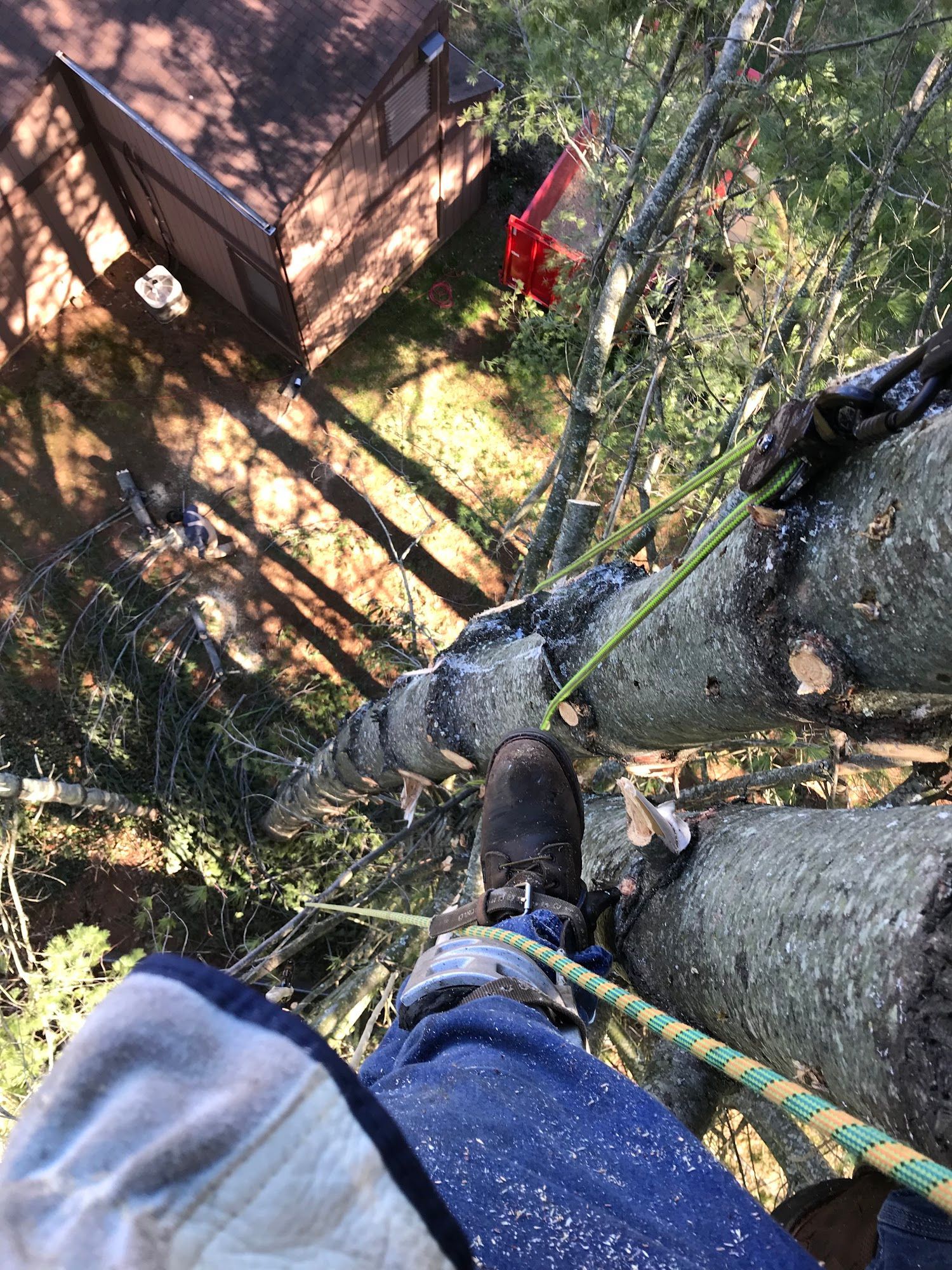
Mature trees add decades of shade and landscape value, but codominant trunks with narrow attachment angles or heavy limbs with visible cracks often won't survive the next ice storm without structural reinforcement. Tree cabling provides support for weak or split trees by installing flexible steel cables between major limbs or trunks to limit movement and reduce the risk of failure during high winds and ice loading. RMZ Tree Service LCC evaluates trees for cabling viability and installs systems using proven industry practices across residential and commercial properties in Madison Heights. The goal is preserving specimens whenever possible rather than defaulting to removal when structural issues are caught early enough for intervention.
Cabling works by restricting the range of motion between supported limbs—cables absorb dynamic load during wind events and prevent the separation that occurs when weak unions flex beyond their attachment strength. Systems are installed high in the canopy, typically at two-thirds the distance between the weak union and the branch tips, using through-bolts and thimbles to distribute tension without damaging cambium layers.
Schedule an assessment to determine whether a tree is a candidate for cabling or if structural issues have progressed too far for effective support.
Why Cabling Is Recommended After Professional Evaluation
Not every tree benefits from cabling—candidates must have sufficient sound wood around the weak union to hold hardware, and the overall health of the tree must justify the investment in support rather than replacement. Professional evaluation identifies whether decay is isolated or extensive, whether the attachment angle can be effectively stabilized, and whether the tree's location warrants the expense of preserving it. Cabling reduces limb failure risk during storms but doesn't eliminate it entirely, and systems require periodic inspection to verify cable tension and hardware integrity.
Once a system is installed, you'll notice reduced sway at the supported union during wind events and elimination of the visible widening crack or bark separation that appears when weak branches flex independently. The tree remains functional in the landscape, providing shade and aesthetic value without the overhead hazard of an unsupported split.
Cabling is often combined with trimming to reduce end weight on the supported limbs, which lowers the total load the cable system must restrict. Multi-trunk trees with several weak unions may require multiple cables at different heights to address all failure points. Systems installed correctly can function for many years, though annual inspections ensure hardware hasn't loosened and that new growth hasn't altered load distribution.
What Property Owners Want to Know About Cabling
Cabling decisions involve understanding which trees are worth the effort, how systems perform during severe weather, and what maintenance is required after installation.
What types of trees need cabling?
Trees with codominant trunks that form narrow V-shaped unions, large lateral branches with cracks visible at the attachment point, or specimens that have partially split but remain living are common candidates. Mature hardwoods with significant landscape value are often prioritized for cabling over younger trees that could be replaced more affordably.
How does cabling compare to removal costs?
Cabling typically costs less than removing a large mature tree and replanting a replacement, especially when the existing tree provides immediate shade and aesthetic benefits that take decades to reestablish. The evaluation considers both cost and whether the tree's condition justifies preservation.
Will cables damage the tree over time?
Properly installed cables use hardware that doesn't girdle branches or restrict growth—through-bolts with washers distribute pressure, and high-strength steel cables flex enough to allow some natural movement while restricting excessive sway. Cables should be checked periodically to ensure hardware hasn't become embedded in growing wood.
How long does a cabling system last?
Systems installed using industry-standard hardware and techniques in Madison Heights typically function for many years, though cables and hardware should be inspected annually for signs of wear, rust, or loosening. Trees that continue growing may eventually require hardware adjustments to accommodate increased trunk diameter.
Can cabling prevent all storm damage?
Cabling significantly reduces the likelihood of failure at supported unions but doesn't guarantee the tree will survive every severe weather event. Extreme ice loading or tornadic winds can exceed the capacity of any support system, but cabling improves odds considerably compared to unsupported weak unions.
RMZ Tree Service LCC installs cabling systems after thorough evaluation of tree structure and site-specific risks. Arrange a consultation to review whether your mature trees are candidates for support or if other options better address the structural concerns you're facing.