
Choosing Species That Thrive Locally
Tree Planting in Madison Heights for properties seeking long-term landscape value and curb appeal
Planting the wrong species in poor locations results in years of maintenance problems—surface roots heaving sidewalks, branches interfering with utility lines, or trees declining from soil conditions they're not adapted to handle. Proper tree planting involves selecting appropriate species for site conditions, using correct spacing and placement techniques, and installing trees in ways that promote healthy root establishment and long-term growth. RMZ Tree Service LCC helps customers choose trees that match their property's soil, sunlight, and space constraints across residential and commercial sites in Madison Heights. You'll see improved curb appeal immediately, with the real value developing as the tree matures and provides shade, privacy, and increased property worth over the coming decades.
Selection matters as much as installation—native species like oaks, maples, and redbuds typically adapt better to central Virginia's clay soils and seasonal moisture fluctuations than non-native ornamentals that require ongoing irrigation and soil amendments. Placement must account for mature canopy spread, root zone needs, and clearance from structures, driveways, and overhead utilities that the tree will eventually reach.
Request a consultation to discuss species options that align with your landscape goals and site-specific growing conditions.
What Proper Installation Requires
Installation begins with digging a hole two to three times wider than the root ball but no deeper—planting too deep causes root flare burial and long-term decline as roots suffocate under excess soil. The tree is positioned so the root flare sits slightly above finished grade, backfilled with native soil rather than amendments that create a transition zone roots hesitate to cross. Initial watering settles soil around roots and eliminates air pockets that dry out fine feeder roots responsible for water uptake.
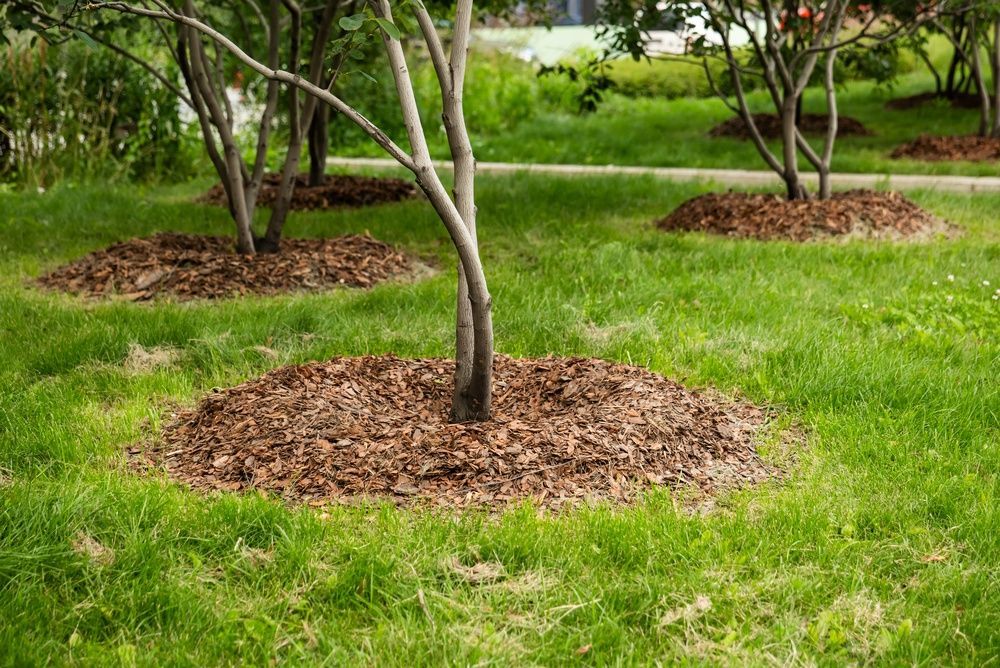
After planting, you'll notice an established visual anchor in the landscape and the beginning of shade development as the canopy expands. Proper installation promotes rapid root establishment, which allows the tree to access moisture and nutrients without prolonged dependence on supplemental watering. Mulching around the base conserves soil moisture and moderates temperature swings that stress newly planted specimens, though mulch must be kept away from direct trunk contact to prevent rot.
Staking is used only when necessary—trees planted in high-wind areas or with small root balls benefit from temporary support, but most installations establish faster without staking since natural trunk movement stimulates root growth. Commercial properties often plant in groupings or rows to create privacy screens, windbreaks, or defined property boundaries that take shape as trees mature over five to ten years.
Questions Before Starting Your Planting Project
Planting decisions involve understanding species characteristics, site preparation, and what care is required during the establishment period after installation.
How do I choose the right tree for my property?
Consider mature size relative to available space, growth rate, maintenance requirements, and whether the species tolerates your site's soil drainage and sunlight exposure. Fast-growing species provide quicker results but often have weaker wood prone to storm damage, while slower-growing hardwoods develop stronger structure and live longer.
What's the best time to plant trees in Madison Heights?
Fall planting allows roots to establish before winter dormancy and positions trees to take advantage of spring growth without the stress of summer heat. Spring planting works as well but requires more consistent watering through the first summer as roots develop.
How far should trees be planted from structures and utilities?
Large shade trees need at least fifteen to twenty feet of clearance from buildings to prevent root interference with foundations and branches from overhanging roofs, while smaller ornamentals can be planted closer depending on mature spread. Overhead utility lines require species selection that won't exceed clearance height at maturity.
What care is required after planting?
Newly planted trees need consistent moisture during the first two growing seasons—deep watering once or twice weekly is more effective than frequent shallow watering that doesn't reach developing roots. Mulch should be replenished as it decomposes, and staking should be removed after the first year to avoid restricting trunk development.
How long before a newly planted tree provides shade?
Small ornamental trees may develop noticeable canopy within three to five years, while larger shade trees often take seven to ten years to create significant coverage. Growth rate depends on species, site conditions, and how quickly roots establish in the surrounding soil.
RMZ Tree Service LCC handles site evaluation, species selection, and installation to set up long-term success for your landscape investment. Schedule a planting consultation to add lasting beauty and function to your property with trees chosen for your specific conditions.