
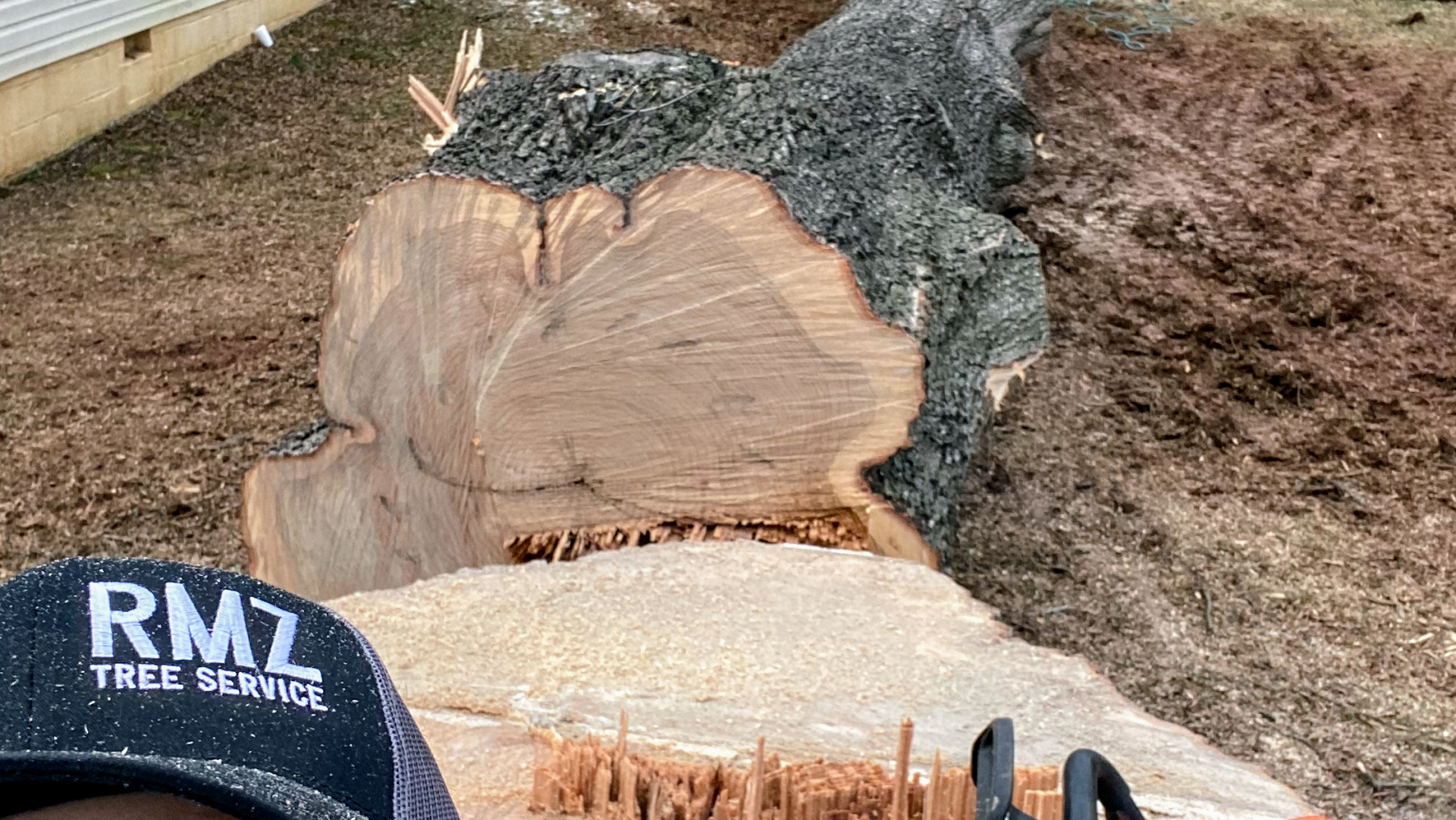
Removing Trees That Pose Property Risks
Tree Removal in Madison Heights for hazardous trees threatening structures or utility lines
Dead trees, storm-damaged limbs overhanging your roof, or declining trunks leaning toward power lines create immediate hazards that worsen with every windstorm. RMZ Tree Service LCC removes hazardous, dead, or unwanted trees from residential and commercial properties across Madison Heights and surrounding areas in central Virginia. You'll notice the difference once overhead threats are gone and your property lines are clear of unstable growth that could fail during the next severe weather event.
Tree removal involves more than cutting through a trunk—the process requires rigging systems to control each section's descent, planning fall zones that avoid structures and landscaping, and coordinating cuts to prevent barber-chairing or unexpected splits. In areas with nearby buildings, fencing, or underground utilities, the tree often comes down in sections rather than a single directional fall, with each piece lowered by rope to protect what's underneath.
Request a free tree removal estimate to evaluate specific hazards and plan the safest approach for your property layout.
What Happens During Professional Tree Removal
The crew begins by assessing lean direction, weight distribution, and nearby obstacles before making any cuts. Professional equipment including rigging ropes, pulleys, and controlled lowering systems ensures each section of the tree moves exactly where it's intended, protecting structures, landscaping, and utilities throughout the process. Storm-damaged trees require additional caution since internal splitting or hidden cracks can cause unpredictable failure when tension is released during cutting.
Once the tree is down, you'll see cleared sight lines, eliminated overhead hazards, and open space where unstable growth previously loomed over driveways, roofs, or play areas. Efficient cleanup follows every project—the site is left without scattered limbs, wood debris, or sawdust piles that interfere with mowing or outdoor use.
Removal also eliminates root systems that could interfere with future construction, drainage work, or replanting plans. Properties with multiple declining trees benefit from phased removal that prioritizes the most hazardous specimens first, then addresses less urgent removals as budget and scheduling allow.
Questions Property Owners Ask About Tree Removal
Tree removal decisions often involve safety concerns, timing considerations, and site-specific planning that varies depending on tree size, location, and surrounding structures.
What determines whether a tree needs to be removed?
Visible indicators include large dead branches throughout the canopy, hollow or decayed trunks, significant lean toward structures, root damage from construction or soil erosion, and storm damage that compromises structural integrity. Trees with extensive dieback or fungal growth at the base often lack the stability to withstand high winds common in central Virginia during spring and summer storm seasons.
How is removal handled near buildings or power lines?
The tree comes down in sections rather than a single fall, with each piece rigged and lowered by rope to avoid contact with structures, fencing, or overhead utilities. Crew positioning and cut sequencing are planned to control every movement throughout the process.
What happens to the wood after the tree is cut?
Wood is typically removed from the site as part of cleanup, though property owners can request that logs be cut into manageable lengths and left on-site for firewood or milling. Branches and smaller debris are chipped or hauled away depending on volume and accessibility.
When is the best time to schedule tree removal?
Removal can occur year-round, but late fall through early spring offers advantages—trees are dormant, foliage is minimal for better visibility of structure and decay, and ground conditions in Madison Heights are typically firm enough for equipment access without damaging lawns.
How long does a typical removal project take?
Timeline depends on tree size, proximity to obstacles, and access for equipment. A single large tree near structures may require several hours of rigging and sectional removal, while open-area trees with clear fall zones are often completed in less time. Multi-tree projects are scheduled based on total volume and site complexity.
RMZ Tree Service LCC handles tree removal with professional equipment and experienced crews trained to protect your property throughout the project. Schedule a site evaluation to discuss specific concerns and develop a removal plan that addresses hazards while preserving the landscape features you want to keep.